
The Ministry of Science and ICT (Deputy Prime Minister and Minister of Science and ICT Bae Kyung-hoon) will hold the finals of the Quantum Reframing Challenge 2026 — a competition to solve real-world industrial problems using actual quantum computers — on August 26 at the Samjung Hotel in Seoul. The twelve teams that cleared the preliminaries will present the solutions they derived on different types of quantum computers based on ion-trap, neutral-atom and photonic architectures, and the single grand-prize team will receive the Deputy Prime Minister and Minister of Science and ICT Award along with a prize of 7 million won.
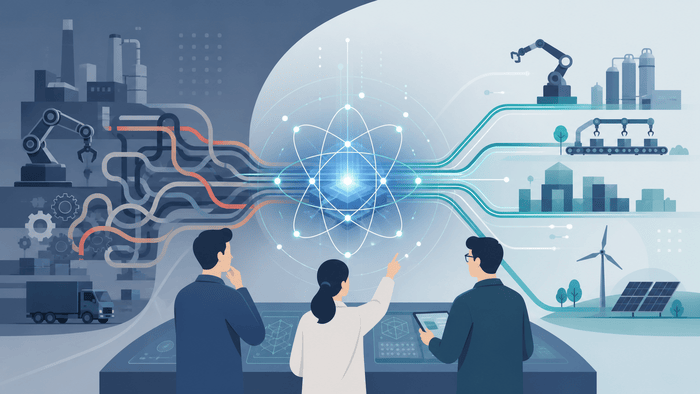 [코리안투데이] Quantum Reframing Challenge 2026 finals presentation and awards ceremony © 장형임 기자 |
The competition was arranged amid the shift of quantum technology from the laboratory stage toward industrialization. Earlier, on August 12, the government designated the quantum field as a next-generation frontier area among the future growth engine 7 SEED initiative and announced a strategy to link cutting-edge technology to future industries. The competition supports the brisk implementation of this strategy while also aiming to broaden the practical use of the IonQ 100-qubit ion-trap quantum computer being introduced and built at the Korea Institute of Science and Technology Information (KISTI). Its significance lies in directly uncovering industrial use cases for quantum computers and verifying them on real machines, rather than showing off theoretical performance.
The preliminaries, which began on June 19, drew applications from 214 people across 73 teams, including undergraduate and graduate students, researchers and industry professionals, and 54 of those teams submitted proposals grounded in industrial and public problems in areas such as manufacturing, materials, finance, optimization and artificial intelligence (AI). After evaluation, twelve teams advanced to the finals. A notable feature was the Kolon Custom Track, run separately from the open-topic category, which set problems drawn from a sponsoring company’s actual industrial challenges so that real field difficulties could be tackled together.
The finals tasks fall broadly into two streams. One is the computational-science type, in which quantum computers correct the points where conventional classical computing methods break down. Examples include calculating the nitrogen-molecule bond-cleavage energy of ammonia-synthesis catalysts (Quantum Yaho), correcting precursor calculations for semiconductor deposition and etching (Schrodinger’s Puppy), and predicting the decomposition pathways of battery electrolyte additives (Chinja Quantum). The other is the combinatorial-optimization type, which reshapes into a quantum-suitable form problems that have so many possible cases that classical computers struggle to find the optimal solution. Representative examples include job assignment for port yard cranes that share a single rail and cannot overtake one another (Kim Haeng-in), directional control of low-frequency noise from outdoor concert venues that even sound barriers cannot block (DEEPDIVE), and accelerating the search in the victim-identification segment of large-scale disasters, where intertwined kinship makes combinations explode (Adopted Son).
From August 13 to 25, the finalist teams implemented and verified their tasks directly in three real quantum-computing environments based on different principles — ion trap (IonQ), neutral atom (Pasqal) and photonic (Quandela). At the August 26 presentations, judging will focus on comparison and analysis against classical computing methods, along with the potential and limits of industrial application. The competition officially permitted the use of AI such as large language models, with usage required to be documented. Bonus points are awarded for cross-using the different architectures.
Based on the overall assessment, the top five teams will be eligible for the main awards. A total prize pool of 20 million won is at stake: the Deputy Prime Minister and Minister of Science and ICT Award (7 million won) for the single grand-prize team, the KISTI President’s Award (4 million won each) for two runner-up teams, and the Korea Quantum Convergence Center Director’s Award (2.5 million won each) for two excellence-award teams. On top of this, sponsoring companies including Quandela, Pasqal and Kolon have prepared special prizes, offering winning teams cooperation opportunities with global quantum firms such as quantum-computer usage time, internships and a tour of Quandela’s headquarters in France, and follow-up support for proof of concept. The competition is hosted and operated by KISTI, Megazone Cloud and the Korea Quantum Convergence Center (KQNC) as part of the Ministry of Science and ICT’s Quantum Computing Service and Utilization System Development project.
This competition draws attention for demonstrating that quantum computers are not tools for a select group of researchers alone, but can actually solve industrial problems close to residents’ lives — in materials, semiconductors, secondary batteries, port logistics, financial payments and disaster administration. Cutting the time for disaster victim identification speeds up administrative procedures such as death registration and insurance for bereaved families, and controlling the direction of low-frequency concert-venue noise can ease noise complaints from nearby residences — presenting the point where advances in computing performance connect to tangible benefits for citizens.
Kim Sung-soo, Director-General for R&D Policy, said, ‘The quantum computer is a technology with an enormous ripple effect across every industry, and a core strategic technology that can pioneer a new future by surpassing the limits of classical computers,’ adding, ‘For the brisk implementation of the quantum field within the 7 SEED initiative, we will strengthen support not only for the development and introduction of quantum-computer hardware but also for its industrial use.’ He further stated, ‘The government will provide firm backing so that the industrialization of quantum technology can be accelerated and linked to the growth of the national economy and industry.’
지역 홍보대사 신청 기자양성과정 신청 코리안투데이 지부장 신청 코리안투데이 인천강화
THE KOREAN TODAY × WIA CODE
이 기사의 WIA Code

WIA Code 스캐너로 비추면 인터넷 없이 발행 사실과 위·변조 여부를 확인할 수 있습니다.
휴대폰 기본 카메라로 찍으면 스캐너 안내 페이지가 열립니다 — 기사 바로 열기
움직이는 코드(스트림) 한 장에 기사 전문(사진 포함)이 담겨 있습니다 — WIA Code 스캐너로 약 21초 비추면 폰에 저장되어 인터넷 없이도 읽을 수 있습니다. Stream.mp4 도 여기서 받습니다.
WIA Code · 코리안투데이




Leave a Reply