
Kim Jin-o, Vice Chairman of the Presidential Committee on Ageing Society and Population Policy, visited Jeonnam-Gwangju Integrated Special City on August 27 and pursued a wide-ranging agenda spanning population policy across a single day — from hosting a population forum to a youth roundtable, a meeting with the mayor and an inspection of medical front lines. The aim is to identify the conditions that keep people in place in non-capital regions, where regional decline and youth outflow have become a reality.
 [코리안투데이] 김진오 저고위 부위원장 전남광주통합특별시에서 인구포럼 청년간담회 등 인구전략 광폭 행보 © 장형임 기자 |
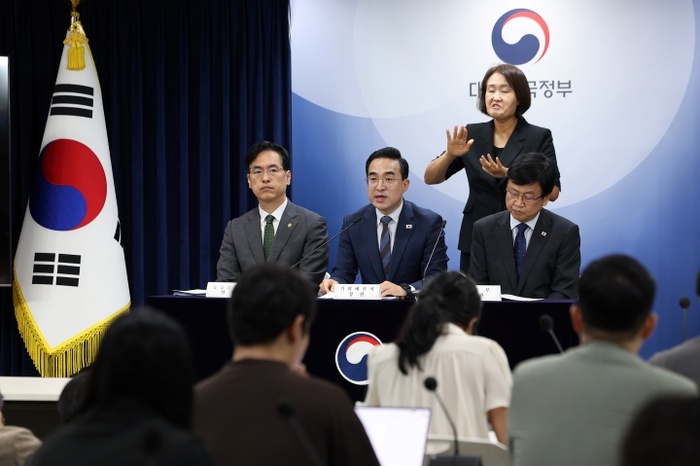
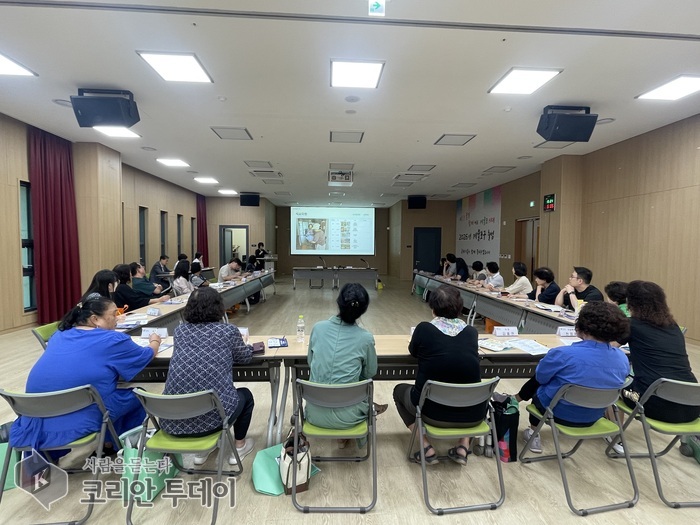
The Presidential Committee on Ageing Society and Population Policy (Vice Chairman Kim Jin-o, hereinafter the Committee) and the Korea Institute for Health and Social Affairs (President Shin Young-seok) co-hosted the 43rd Population Forum on August 27 at Mudeung Hall in the Gwangju government complex of Jeonnam-Gwangju Integrated Special City.
Held under the theme ‘Reasons to Leave, Conditions to Stay,’ the forum focused intensively on the interrelationship among population movement, corporate relocation and settlement conditions. The first session, chaired by Professor Ma Kang-rae of Chung-Ang University, was conducted under the theme ‘The Movement and Settlement of People.’ Drawing on the findings of a survey on population movement and settlement patterns, the discussion covered how single men and women meet in the regions, the residential mobility and child-rearing environment of families with children, and the movement and settlement perceptions of the middle-aged.
The survey results clearly showed a reality in which marriage does not lead to local settlement in rural and fishing areas. According to responses from 1,741 unmarried people aged 19 to 49, the share saying they would remain in their current place of residence after marriage reached 42.9% in metropolitan-city areas, but stood at just 27.5% in the towns and townships within the provinces. Respondents named stable jobs (64.8%) as the top policy needed for settlement, confirming the perception that without jobs there is no settlement.
 [코리안투데이] 김진오 저고위 부위원장 전남광주통합특별시에서 인구포럼 청년간담회 등 인구전략 광폭 행보 © 장형임 기자 |
The second session, chaired by Professor Kim Shin-young of Hanyang Cyber University, was conducted under the theme ‘If Companies Come, Do People Follow?’ Discussions among regional corporate and citizen panels on jobs, talent and settlement conditions at local corporate sites were followed by policy proposals from experts.
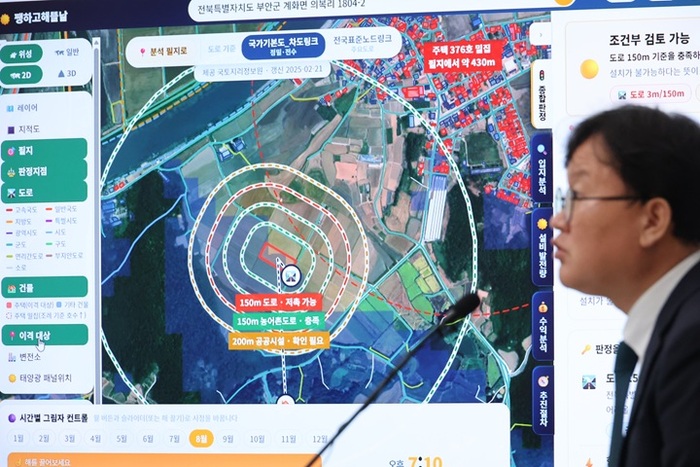
Ahead of the forum, Vice Chairman Kim Jin-o held a roundtable with young people living in Gwangju to hear their views on population policy. The young participants said that opportunities to build credentials, such as internships, are concentrated in the capital region, and voiced views grounded in their own experience — calling for fair opportunities in non-capital regions and for support for transportation costs. Following a youth roundtable on June 11, the Committee has steadily continued communication with young people, including gathering their views through the Population Forum on June 24.
Vice Chairman Kim stated, ‘To build a society where young people can dream of the future and where raising children becomes a blessing, we will review youth policy centered on three areas: ① marriage, childbirth, pregnancy and child-rearing, ② housing and finance, and ③ jobs and income.’
 [코리안투데이] 김진오 저고위 부위원장 전남광주통합특별시에서 인구포럼 청년간담회 등 인구전략 광폭 행보 © 장형임 기자 |
Vice Chairman Kim then met with Min Hyung-bae, Mayor of Jeonnam-Gwangju Integrated Special City, to discuss ways to strengthen cooperation between the Committee and the city in responding to population issues. The meeting was part of Vice Chairman Kim’s round of visits with provincial governors and mayors, the third following North Gyeongsang and Seoul. Vice Chairman Kim proposed population strategies tailored to Jeonnam-Gwangju, including the introduction of a living-population registration system to promote the inflow of living population, the creation of an industry-academia business belt around Gwangju Station and Chonnam National University linked to a semiconductor cluster, and the development of a University-Based Retirement Community (UBRC) that draws on the university and medical infrastructure around Chosun University.
Mayor Min Hyung-bae responded, ‘Setting growth and balance as the guiding principles of city administration, we will create an environment where young people stay in the region — through region-led growth that breaks away from a capital-centric system, and through building a semiconductor cluster and attracting large-scale government support to prevent youth outflow.’
 [코리안투데이] 김진오 저고위 부위원장 전남광주통합특별시에서 인구포럼 청년간담회 등 인구전략 광폭 행보 © 장형임 기자 |
Finally, Vice Chairman Kim visited Chonnam National University Hospital, where he met the deputy director for medical affairs and others to observe the region’s pediatric and obstetric-gynecological medical front lines and hear voices from the field. As gaps in essential regional medical care are cited as a key variable determining settlement conditions, the inspection of medical front lines is seen as a move directly linked to population strategy.
Meanwhile, the Committee is set to be expanded and reorganized into the Population Strategy Committee on September 10, when its policy scope will newly include regional population movement, disparities among regions, and the mitigation of regional decline. Vice Chairman Kim stated, ‘We will incorporate into the First Basic Population Strategy Plan measures to expand opportunities for the local settlement of young people and others, to improve regional settlement infrastructure, and to boost regional vitality, and we will do our utmost to mitigate regional decline.’
지역 홍보대사 신청 기자양성과정 신청 코리안투데이 지부장 신청 코리안투데이 인천강화
THE KOREAN TODAY × WIA CODE
이 기사의 WIA Code

WIA Code 스캐너로 비추면 인터넷 없이 발행 사실과 위·변조 여부를 확인할 수 있습니다.
휴대폰 기본 카메라로 찍으면 스캐너 안내 페이지가 열립니다 — 기사 바로 열기
움직이는 코드(스트림) 한 장에 기사 전문(사진 포함)이 담겨 있습니다 — WIA Code 스캐너로 약 74초 비추면 폰에 저장되어 인터넷 없이도 읽을 수 있습니다. Stream.mp4 도 여기서 받습니다.
WIA Code · 코리안투데이


Leave a Reply