
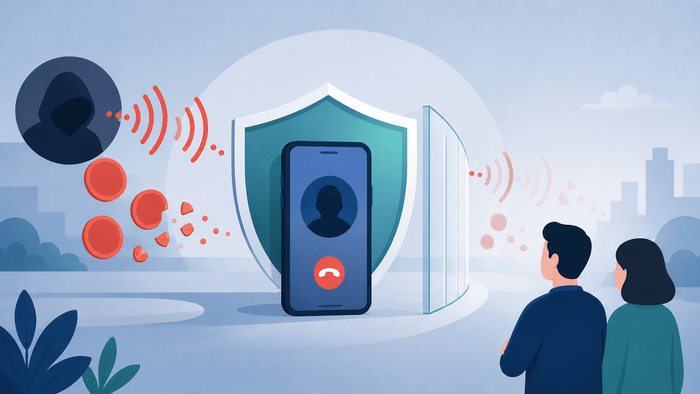
One year after the government rolled out its Comprehensive Measures to Eradicate Voice Phishing, the number of such crimes has fallen by 39.9 percent and the amount of losses by 43.2 percent, according to the government. By shifting its response from after-the-fact cleanup to a focus on prevention and blocking, the government has sustained a decline for 10 consecutive months.
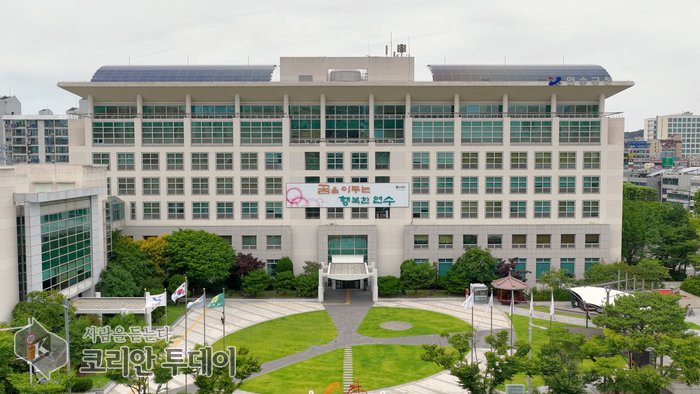
 [코리안투데이] Meeting of the government-wide Task Force on Voice Phishing Response © 장형임 기자 |
On September 2 at 2 p.m., the government held a meeting of the government-wide Task Force on Voice Phishing Response at the Government Complex Seoul, chaired by Lim Ki-geun, head of the Office for Government Policy Coordination, to review the results of the first year of the comprehensive measures. The meeting was attended by related agencies including the Ministry of Science and ICT, the Ministry of Justice, the Ministry of Culture, Sports and Tourism, the Financial Services Commission, the Korea Communications Commission, the Personal Information Protection Commission, the Supreme Prosecutors’ Office, the National Police Agency, and the Financial Supervisory Service.
As new schemes emerged and voice phishing grew more sophisticated, posing a broad threat to people’s livelihoods and property, the government unveiled the comprehensive measures last August, centered on the government-wide task force. Over the following year, it pursued six major policy tasks and 15 action items, including the launch of an Integrated Response Unit, emergency blocking of phone numbers used in crimes, stronger artificial intelligence (AI)-based detection and warning, and enhanced international cooperation.
As a result, voice phishing crimes, which had been rising through September of last year, fell in both the number of cases and the amount of losses for 10 consecutive months from October last year through July this year. During that period, the number of cases dropped from 20,900 to 12,554, and losses fell from 1.1137 trillion won to 632.4 billion won. The government attributed these results to a paradigm shift from reactive and fragmented responses to preventive and preemptive ones, along with the establishment of an integrated cooperation system among relevant agencies.
First, response capabilities were concentrated through inter-ministerial collaboration. Last October, the government expanded and reorganized the Integrated Reporting and Response Center for Telecommunications-based Financial Fraud, previously housed at the National Police Agency, into the Integrated Response Unit for Telecommunications-based Financial Fraud. Ten officials from six organizations — the Ministry of Science and ICT, the Korea Communications Commission, the Financial Services Commission, the Financial Supervisory Service, the Korea Internet & Security Agency (KISA), and the Financial Security Institute — were dispatched to work jointly. Before the unit’s launch, reports could only be filed during weekday business hours and the response rate stood at around 60 percent; now reports can be filed 24 hours a day, 365 days a year, and the response rate is maintained at around 98 percent.
Since November of last year, the National Police Agency, together with KISA, the three major telecom carriers, and Samsung Electronics, has been operating an ’emergency blocking system’ that suspends both incoming and outgoing service on phone numbers used in crimes for seven days. Previous service suspensions took an average of two to three days to take effect, making it difficult to prevent early spread, but emergency blocking has shortened the required time to within 10 minutes. Since the system took effect, 115,088 numbers have been blocked to date.
Investigations have also been strengthened. Since September of last year, the National Police Agency has pursued a ‘special crackdown on phishing crimes,’ arresting 38,577 suspects through July this year — an 18.4 percent increase from the previous year. It also caught 16,917 suppliers of criminal tools such as borrowed-name bank accounts and burner phones. International cooperation has shifted from a model of requesting help from individual countries to a system led directly by the National Police Agency. Operating a ‘Korea Task Force’ in Cambodia, police arrested 217 suspects and rescued eight victims, and forcibly repatriated 137 fugitives abroad on a chartered flight. To prevent a balloon effect, police also carried out joint operations with nearby major countries, arresting 405 members of overseas scam organizations from October last year through July this year and repatriating 274 of them.
The Supreme Prosecutors’ Office, centered on its Joint Investigation Division for Voice Phishing Crimes, booked 313 people and detained 154 from September last year through July this year. The rate of detention-based investigations rose from 35.9 percent before the comprehensive measures to 49.2 percent. Through its ‘Special Response Task Force on Transnational Crime,’ the Ministry of Justice repatriated numerous criminals, including a Cambodian couple’s fraud ring that swindled about 10.1 billion won from 97 victims in Korea.
A system for prevention and preemptive response was also newly established. The Ministry of Science and ICT built a proactive prevention system that blocks access to malicious URLs and the installation of malicious apps starting from the stage when malicious text messages are sent, and, in cooperation with Google, applied a security program that automatically blocks malicious-app installation on all Android phones. Since December of last year, Samsung devices and the phone apps of the three telecom carriers have provided, by default (opt-out), a function that detects and warns of suspected voice-phishing calls. The Financial Services Commission built an AI platform to rapidly share financial, telecommunications, and investigative information, sharing 463,000 pieces of suspicious information and preemptively blocking 66.36 billion won in fraud from October last year through the end of July this year.
Overhauls of laws and systems followed. The Korea Communications Commission revised the Network Act to impose a fine of up to 6 percent of related revenue for illegal spam and to allow confiscation and collection of criminal proceeds. The Ministry of Science and ICT revised the Telecommunications Business Act to prevent burner phones and caller-ID spoofing, and in June announced ‘Comprehensive Measures to Prevent Mobile Phone Misuse.’ The Financial Services Commission revised the Act on Refunds for Telecommunications-based Financial Fraud so that voice phishing involving virtual assets can also qualify for victim relief. The Ministry of Justice revised the Criminal Act to allow sentences of up to 30 years in prison even for fraud of less than 500 million won if there are multiple victims, and introduced an ‘independent confiscation system’ that allows criminal proceeds to be confiscated regardless of a guilty verdict or whether the suspect has been taken into custody.
Supplementary measures continued even after the comprehensive measures were announced. Since June 30, the Korea Financial Intelligence Unit (FIU) has operated a system to suspend transactions on accounts suspected of new types of scam crimes, processing 5,018 transaction suspensions through August 21. This year, the National Police Agency blocked some 53,000 social media accounts abused for crimes and sent about 51,000 risk alerts to people feared to be at risk. Through a one-stop support system operated in partnership with KB Financial Group and the Credit Counseling and Recovery Service, 118 tailored services such as debt restructuring and psychological and legal counseling were provided.
Lim Ki-geun, head of the Office for Government Policy Coordination, called the results of the past year ‘a model case of inter-ministerial collaboration and proactive administration,’ and asked officials to work to spread such achievements to other fields. He went on to stress that ‘the greatest goal of the Lee Jae-myung administration is a government that protects the lives and livelihoods of the people,’ urging them to take even greater responsibility in responding to voice phishing.
Voice phishing is a crime deeply embedded in daily life, one in which anyone can become a target regardless of region or social class. This achievement, in which both incidence and losses fell at the same time, means that the risk of financial harm to which ordinary citizens, including residents of Ganghwa (Ganghwa-gun, Incheon), were exposed on a daily basis has substantially declined.
지역 홍보대사 신청 기자양성과정 신청 코리안투데이 지부장 신청 코리안투데이 인천강화
THE KOREAN TODAY × WIA CODE
이 기사의 WIA Code

WIA Code 스캐너로 비추면 인터넷 없이 발행 사실과 위·변조 여부를 확인할 수 있습니다.
휴대폰 기본 카메라로 찍으면 스캐너 안내 페이지가 열립니다 — 기사 바로 열기
움직이는 코드(스트림) 한 장에 기사 전문(사진 포함)이 담겨 있습니다 — WIA Code 스캐너로 약 18초 비추면 폰에 저장되어 인터넷 없이도 읽을 수 있습니다. Stream.mp4 도 여기서 받습니다.
WIA Code · 코리안투데이




Leave a Reply