
Eleven outstanding research groups poised to pioneer core research fields with world-class competitiveness in basic research have been newly designated as Leading Research Centers. On August 27, the Ministry of Science and ICT held a ceremony to present certificates of designation and center plaques to the newly selected Leading Research Centers for 2026.
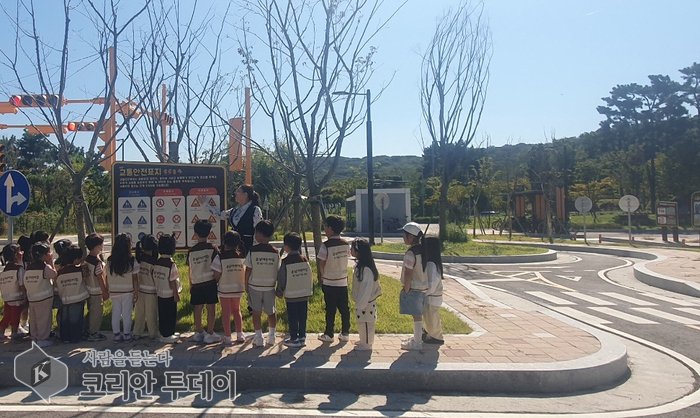
 [코리안투데이] Ceremony for the presentation of certificates of designation and plaques to the Ministry of Science and ICT’s newly designated Leading Research Centers for 2026 © 장형임 기자 |
The Ministry of Science and ICT (Deputy Prime Minister and Minister of Science and ICT Bae Kyung-hoon) presented certificates of designation and plaques on the 27th to the 11 centers selected for the 2026 Leading Research Center program under its basic research projects. Support for the newly selected centers began in July, and each will receive research funding of between 1.5 billion and 2.2 billion won per year for seven years.
The Leading Research Center program was launched in 1990 to strengthen organized collaborative research at universities and to reinforce industry-academia-research ties. As a program supporting mid- to large-scale joint research involving roughly 8 to 13 researchers, it has served as a cradle for generating innovative basic-research achievements through cross-disciplinary convergence and collaboration, building knowledge networks, and nurturing creative, convergence-minded researchers.
The results are borne out in the numbers. Leading Research Centers publish about 3,500 SCI papers a year, and their citation counts, which reflect the qualitative level of the research, reach 1.5 times the national average. Both quantitatively and qualitatively, the centers play a central role in producing Korea’s basic-research achievements, and they continue to bear fruit in patent applications and in training master’s and doctoral personnel.
This year, four centers were selected in the natural sciences (SRC), three in engineering (ERC), and four in basic medical sciences (MRC).
In the natural sciences, the Center for Mathematical Algorithms and Security led by Professor Kim Pan-ki of Seoul National University will conduct research on the probabilistic algorithms of artificial intelligence and on encryption of learning-related data. The Center for Quantum Phononics led by Professor Lee Jae-kwang of Pusan National University will study a paradigm shift in the semiconductor and battery fields, which face physical limits of heat generation and speed. The Center for Chromosome Systems and Dynamics led by Professor Kim Keun-pil of Chung-Ang University will systematically elucidate the fundamental regulatory principles of life phenomena, while the Center for Plant Fruit Growth led by Professor Kwak June-myung of the Daegu Gyeongbuk Institute of Science and Technology (DGIST) will incorporate and pioneer a world-first research approach related to fruit growth.
In engineering, the Center for Copolymer Circular Systems led by Professor Ryu Du-yeol of Yonsei University will research the construction of a multidimensional, high-performance copolymer application platform expected to enable low-energy upcycling. The Center for Trustworthy Distributed Physical Systems led by Professor Shim Hyung-bo of Seoul National University will work to establish control and systems theory for securing the reliability of power and transportation networks and swarm robots, while the Center for High-Value Conversion of Environmentally Burdensome Waste Resources led by Professor Park Young-kwon of the University of Seoul will address minimizing the disposal volume of environmentally burdensome waste that is difficult to recycle.
In the basic medical sciences, the Center for Tumor Evolution-Environment Systems led by Professor Kim Tae-min of the Catholic University of Korea will build a clinical diagnosis-treatment application platform for major cancers, laying the foundation for cancer precision medicine. The Center for Neurodevelopmental Disorders Based on Neural Dynamics led by Professor Suh Young-ho of Seoul National University will elucidate the pathogenic mechanisms of neurodevelopmental disorders and propose fundamental solution strategies. The Neurocontinuum Center led by Professor Park Sang-myun of Ajou University will precisely elucidate the pathology of degenerative brain diseases and establish a training model for physician-scientists who bridge basic and clinical research, while the Center for Korean Medicine-Based Leading Convergence Neuromodulation led by Professor Shin Hwa-kyoung of Pusan National University aims to demonstrate the therapeutic mechanisms of Korean medicine for overcoming intractable brain-neural-network disorders.
The scale of support varies by type. The natural sciences receive up to 1.8 billion won per year for seven years (4+3); engineering receives up to 2.2 billion won per year for up to seven years (freely determined); and basic medical sciences receive up to 1.5 billion won per year for seven years (4+3). Such long-term, stable support is significant in that it creates conditions in which researchers can focus on challenging basic research without being driven by short-term results.
Kim Sung-soo, Director-General for R&D Policy at the Ministry of Science and ICT, said, ‘As the science and technology environment changes rapidly, the importance of joint research is growing for creating innovative results and solving convergence problems,’ adding, ‘We will actively support the Leading Research Centers so that they can grow into outstanding research groups with world-class competitiveness under long-term and stable research conditions.’
지역 홍보대사 신청 기자양성과정 신청 코리안투데이 지부장 신청 코리안투데이 인천강화
THE KOREAN TODAY × WIA CODE
이 기사의 WIA Code

WIA Code 스캐너로 비추면 인터넷 없이 발행 사실과 위·변조 여부를 확인할 수 있습니다.
휴대폰 기본 카메라로 찍으면 스캐너 안내 페이지가 열립니다 — 기사 바로 열기
움직이는 코드(스트림) 한 장에 기사 전문(사진 포함)이 담겨 있습니다 — WIA Code 스캐너로 약 28초 비추면 폰에 저장되어 인터넷 없이도 읽을 수 있습니다. Stream.mp4 도 여기서 받습니다.
WIA Code · 코리안투데이



Leave a Reply