
Five artifacts unearthed in excavations on Ganghwa Island have been confirmed as designated cultural heritage of Incheon Metropolitan City. Incheon Metropolitan City (Mayor Park Chan-dae) announced that at a recent review by its Cultural Heritage Committee, all five artifacts excavated in the Ganghwa area were approved as originally proposed and formally designated—four as tangible cultural heritage and one as cultural heritage material.
 [코리안투데이] The bronze incense burner with silver inlay bearing the ‘Seonwon’ inscription, designated as Incheon cultural heritage © 장형임 기자 |
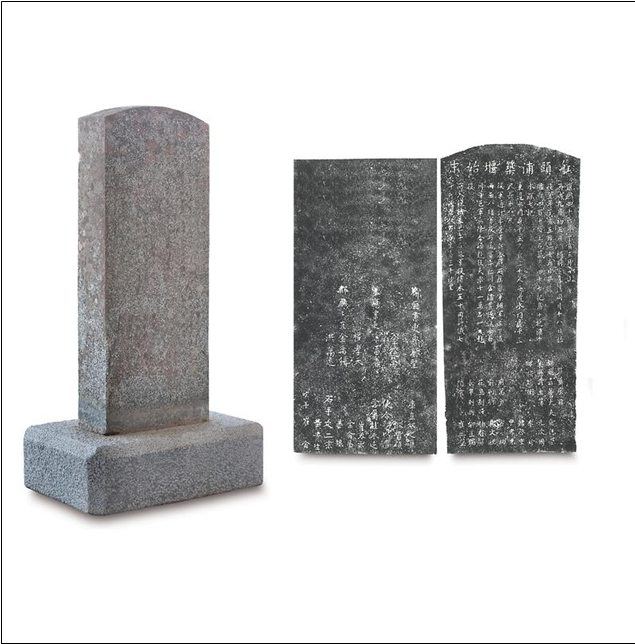
The four items designated as tangible cultural heritage are: an incised Amitabha Buddha and Avalokitesvara mirror-image plaque together with a set of undecorated bronze mirrors; a bronze incense burner with silver inlay bearing the inscription ‘Seonwon’; a gilt-bronze Buddha triad; and a Bullangi cannon barrel from the Geonpyeong Coastal Battery in Ganghwa. Designated as cultural heritage material was the stele commemorating the completion of the Seondupo embankment in Ganghwa.
All five share the common trait of being physical materials whose excavation sites have been clearly identified. The city explained that bringing artifacts with a clear excavation context under institutional protection and management has substantially strengthened the evidentiary basis for Ganghwa Island’s historicity and identity.
The three Goryeo-era artifacts illuminate the Buddhist culture and metalcraft standards of the Ganghwa capital era (1232–1270), when the capital was relocated to Ganghwa during the Mongol invasions. The incised Amitabha Buddha and Avalokitesvara mirror-image plaque together with the set of undecorated bronze mirrors (13th-century Goryeo) is a metalwork item recovered during an excavation of building sites along the Inhwa–Ganghwa road section in Yongjeong-ri, Ganghwa-gun. It comprises one incised Buddhist-image mirror and five plain mirrors. Unlike the many Goryeo bronze mirrors of unknown provenance, its clear excavation context at a building site gives it high value as a historical source. The Buddha and Bodhisattva figures rendered in the incising technique, along with lotus and cloud motifs, reveal the form and function of Buddhist rituals of the period.
The bronze incense burner with silver inlay bearing the ‘Seonwon’ inscription (13th-century Goryeo) is a bronze censer discovered in 2020 at a building site within a housing-development construction area in Changni, Seonwon-myeon, Ganghwa-gun. The inscription ‘禪院 (Seonwon)’ carved on its body confirms that it was made and used at Seonwonsa Temple—the private temple of the Goryeo strongman Choe U, which embodied prayers for overcoming national crisis. Together with the silver-inlay technique, it is regarded as a ritual implement demonstrating a connection with 13th-century Esoteric Buddhist dharani beliefs.
The gilt-bronze Buddha triad (13th-century Goryeo) is a small gilt-bronze statue, roughly 7 cm in height, excavated in 2010 in Gwancheong-ri, Ganghwa-gun. Characterized by the volumetric treatment of the principal Buddha and its flanking attendant Buddhas and by concise linear expression, it has a firmly established provenance and outstanding artistry, making it a benchmark reference for the study of late-Goryeo metal Buddhist sculpture.
The two Joseon-era artifacts provide material evidence of the military and civil-engineering history of Ganghwa Island, a key point in coastal defense. The Bullangi cannon barrel from the Geonpyeong Coastal Battery in Ganghwa (Joseon, 1680, the 6th year of King Sukjong) is a large bronze firearm with a total length of 104.5 cm, excavated in 2017 during the survey of the Geonpyeong Battery exactly as it had been deployed in combat position on its gun mount. Its inscription records the date of manufacture, the chain of command, and even the scope of the craftsman’s responsibility, drawing attention as material that sheds light on the operation of late-Joseon coastal defense systems and on the reception and adaptation of Western firearms.
The stele commemorating the completion of the Seondupo embankment in Ganghwa (Joseon, 1707, the 33rd year of King Sukjong) is a stone monument erected to mark the construction of the Seondupo embankment in Ganghwa, now preserved and displayed at the Ganghwa History Museum. Incised on the stele are the names of the local figures who oversaw the work and of the common people who took part voluntarily, along with records of material procurement and the scale of the project. It is regarded as a decisive historical source for studying land-reclamation policy in the island regions of the late Joseon period, the operation of joint public–private civil-engineering projects, and local administrative history.
Jang Eun-mi, head of the city’s Cultural Heritage Division, said, ‘The five heritage items designated this time are all precious artifacts whose excavation sites have been clearly proven through thorough surveys—treasures that testify without exaggeration to the deep historicity and unique identity of Ganghwa Island.’ She added, ‘We will continue to concentrate our capabilities on systematic preservation and management so that citizens can encounter and enjoy Incheon’s storied cultural heritage close at hand in their daily lives.’
This designation amounts to more than merely adding items to a list of artifacts. Through physical objects with a clear excavation context, the history of Ganghwa Island is confirmed within residents’ living spaces and its regional identity is institutionally guaranteed—an outcome assessed as expanding the cultural assets that citizens can directly enjoy.
지역 홍보대사 신청 기자양성과정 신청 코리안투데이 지부장 신청 코리안투데이 인천강화
THE KOREAN TODAY × WIA CODE
이 기사의 WIA Code

WIA Code 스캐너로 비추면 인터넷 없이 발행 사실과 위·변조 여부를 확인할 수 있습니다.
휴대폰 기본 카메라로 찍으면 스캐너 안내 페이지가 열립니다 — 기사 바로 열기
움직이는 코드(스트림) 한 장에 기사 전문(사진 포함)이 담겨 있습니다 — WIA Code 스캐너로 약 23초 비추면 폰에 저장되어 인터넷 없이도 읽을 수 있습니다. Stream.mp4 도 여기서 받습니다.
WIA Code · 코리안투데이


Leave a Reply