
Incheon has finalized the framework for the natural environment conservation policy it will pursue over the next decade. The Incheon Metropolitan Government (Mayor Park Chan-dae) held a final report session on the 30th for the study to establish the 3rd Incheon Metropolitan City Natural Environment Survey and Natural Environment Conservation Action Plan (2026-2035), unveiling its policy direction and detailed action tasks for the coming ten years.
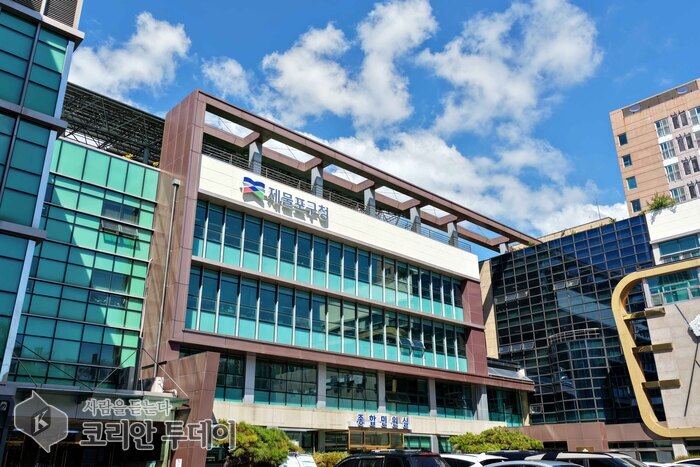
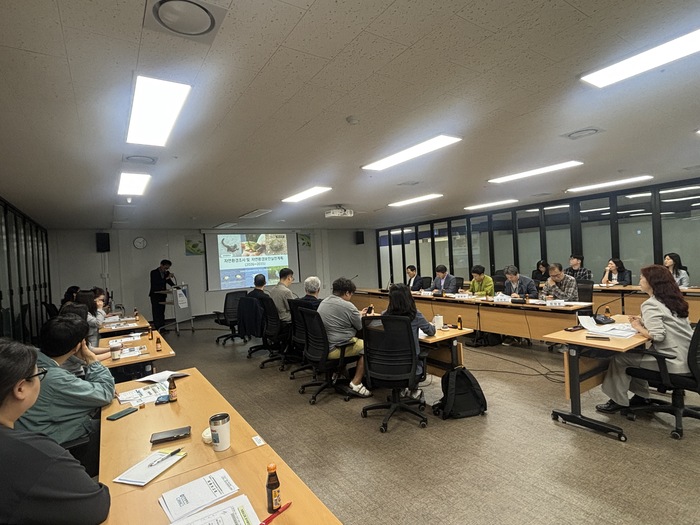 [코리안투데이] Final report session for the study to establish the 3rd Incheon Metropolitan City Natural Environment Survey and Natural Environment Conservation Action Plan © 장형임 기자 |
The vision of this 3rd plan is ‘Incheon, a City of Coexistence with Nature Pursuing Global Standards.’ To realize this, the city set five goals — ▲expanding natural environment (habitat) conservation and restoration projects ▲strengthening wildlife management ▲innovating the policy implementation base ▲enhancing ecosystem services ▲strengthening participation by citizens and businesses and cooperation at home and abroad — and prepared 15 action tasks and 39 detailed action tasks.
The natural environment survey conducted during the planning process included on-site inspections of 168 sites where the presence of biological species had been confirmed, leading to the identification of 16 candidate sites for protected areas. Representative candidates proposed include the fallow-field willow forests in Maedo and Baekseok-dong in Geomdan-gu, the small stream in Moksang-dong in Gyeyang-gu, the Mansam-ine Salamander Village in Namdong-gu, and the zelkova forest at Baengnyeonsa Temple in Ganghwa-gun. Spanning habitats from the northwestern part of Incheon to Ganghwa and encompassing urban areas, streams, and temple forests, these sites are included as conservation targets; once designated and managed, the nature that citizens encounter in daily life will be placed under institutional protection.
To strengthen the substance of the plan, the city held a total of 11 natural environment policy seminars during the study period. The seminars discussed a range of topics, including the policy direction of the national basic plan for natural environment conservation, Other Effective area-based Conservation Measures (OECM), urban Nature-based Solutions (NbS), and corporate ESG participation, and expert opinions were reflected in the plan.
This blueprint was developed on the foundation of natural environment management that Incheon has accumulated over the years. Following the 1st plan (2006-2015) established in 2005 and the 2nd plan (2016-2025) in 2016, the city successively prepared a biodiversity strategy and action plan in 2017, a flagship-species habitat survey and conservation measures in 2022, and a detailed plan for wildlife protection and wildlife disease management in 2023. In 2024, it updated the urban ecological status map and built a system for its use, thereby strengthening a data-based management framework.
Field projects have also continued steadily. The city has pursued the creation of Keunseom Island at the Namdong retention basin and an ecological corridor project, the operation of the Black-faced Spoonbill Ecological Learning Center, prevention of wild-bird collisions with transparent noise barriers, environmental improvement of ecological corridors, rescue and treatment of wild animals, eradication of ecosystem-disturbing species, and the Payment for Ecosystem Services (PES) program. This year, it also broadened the scope of international cooperation by holding events and an international forum marking the 20th anniversary of the East Asian-Australasian Flyway Partnership (EAAFP).
Based on this plan, the city intends to systematically pursue public-led projects for the protection and management of habitats, protected areas, and biological species, while spreading citizen volunteering and participatory ecological culture and strengthening support for corporate ESG programs and EAAFP activities. Through this, it aims to build a conservation base in which citizens, businesses, and domestic and international institutions participate together, and to leap forward as a city leading global natural-management standards by attracting central-government pilot projects and strengthening cooperation with international organizations.
Yoon Eun-ju, head of the city’s Environmental Safety Division, said, ‘The significance of this 3rd Natural Environment Conservation Action Plan lies in the fact that it has concretized the policy direction for the next ten years on the basis of the achievements of the natural environment surveys and conservation projects carried out so far,’ adding, ‘We will systematically conserve and restore Incheon’s precious natural environment while carrying out effective projects without setback so that citizens can enjoy the value of nature in their daily lives.’
Through this plan, Incheon intends to organically link overall natural environment policy — from natural environment surveys to the designation and management of protected areas, habitat restoration, wildlife protection, ecotourism, and citizen participation — and to implement action projects in phases and by priority over the next ten years.
지역 홍보대사 신청 기자양성과정 신청 코리안투데이 지부장 신청 코리안투데이 인천강화
THE KOREAN TODAY × WIA CODE
이 기사의 WIA Code

WIA Code 스캐너로 비추면 인터넷 없이 발행 사실과 위·변조 여부를 확인할 수 있습니다.
휴대폰 기본 카메라로 찍으면 스캐너 안내 페이지가 열립니다 — 기사 바로 열기
움직이는 코드(스트림) 한 장에 기사 전문(사진 포함)이 담겨 있습니다 — WIA Code 스캐너로 약 28초 비추면 폰에 저장되어 인터넷 없이도 읽을 수 있습니다. Stream.mp4 도 여기서 받습니다.
WIA Code · 코리안투데이


Leave a Reply