English · 역사는 살아있다 ·
[History Lives - Silla Edition] Episode 11: Hwangnyongsa - The Center of Silla Buddhism
AI 3-line summary
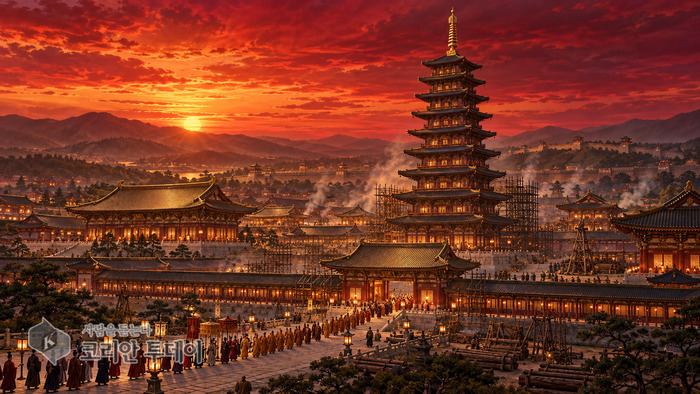
- Construction of Hwangnyongsa began in 553, and a nine-story wooden pagoda was erected in 645. The temple was Silla's largest and a symbol of state-protecting Buddhism and royal authority.
- More than 40,000 artifacts have been unearthed at the Hwangnyongsa site in Gyeongju, and the pagoda's height is estimated at about 80 meters, though this figure is not confirmed.
- The pagoda was lost during the Mongol invasion in 1238, but it was included in the UNESCO World Heritage List in 2000, and efforts to restore it and recreate it through AR are ongoing.
Summary written by AI from the original article · 88 languages
Read the full article (machine translation) → Original article (Korean): [역사는 살아있다 – 신라 편] 제11화: 황룡사 – 신라 불교의 중심
AI 3-line summaryMore ›

Kim Ansuk to chair AI women's policy forum aimed at expanding women's policy participation in Seocho-gu

[100 Years Ago Today] October 25, 1926 - Opening of the Governor-General's Office and Gyeongseong on the Monday 24 Days Later, Na Un-gyu and 'Arirang,' and the Trials Over the Communist Party and the June 10 Incident

Gangseo-gu holds 'Tea Talk' with 15 office workers at Mercure Seoul Magok

Gangseo-gu Pursues $1.68 Million in Export MOUs with Five Beauty SMEs at Shenzhen Korea Business Expo

Healthy lifespan varies by income and region: causes and solutions sought