
박은선 시인의 다섯 번째 시집 손톱 끝에 걸린 세상이 월훈출판사에서 출간됐다. 거대한 사건보다 일상에 남은 미세한 흔적을 바라보는 작품집이다. 시인은 손끝에 닿는 감각과 오래된 기억을 통해 삶의 상처를 응시한다. 사라질 듯한 순간을 붙잡는 절제된 언어도 이번 시집의 중심을 이룬다.
 [코리안투데이] 박은선 시인이 길어 올린 작고 깊은 삶의 진동 © 김현수 기자 |
이 책은 2026년 2월 10일 출간된 180쪽 분량의 양장본이다. 국제표준도서번호는 9791199000964다. 온라인 서점에 공개된 서지 정보에 따르면 책은 모두 5부로 구성됐다. 1부부터 4부까지 시 작품이 이어지며, 5부에는 작가의 말과 배경식의 글, 이승하 시인의 해설이 실렸다. ([예스24][1])
1부는 내 붉은 방석에 누워버린 절명의 시간이라는 제목으로 시작한다. 감꽃, 고요의 산실, 그리움의 감옥, 달빛 유감, 사랑의 불꽃, 삶의 원점 등이 수록됐다. 상실과 고독을 외면하지 않으면서도 감정을 과도하게 밀어붙이지 않는 작품들이다. 시인은 고통을 직접 설명하기보다 사물과 풍경에 남은 흔적으로 보여준다.
2부 장미, 그 환생에서는 상처 이후에도 다시 피어나는 생명에 주목한다. 겨울 호수의 꽃, 나룻배 노 저어 가는 길, 바람의 연, 장미의 제국, 전령사의 비행 등이 독자를 만난다. 장미와 꽃, 바람과 섬 같은 자연의 이미지는 단순한 배경에 머물지 않는다. 기억과 회복을 연결하는 시적 통로로 작용한다.
표제작 손톱 끝에 걸린 세상은 3부 잠잠히, 그러나 영원히에 배치됐다. 이 제목은 시집 전반을 관통하는 박은선 시인의 시선을 압축한다. 손톱 끝은 매우 작지만 예민한 감각이 모이는 자리다. 시인은 그 작은 지점을 통해 지나간 시간과 사람, 마음속에 남은 통증을 다시 불러낸다.
3부에는 결별 선언, 만월의 분신, 사건의 전말, 쉼표, 여백의 춤, 예측 불허, 은비늘 눈물 등이 함께 실렸다. 작품들은 침묵과 여백이 지닌 힘을 강조한다. 말하지 못한 감정도 사라지지 않는다는 사실을 보여준다. 잠잠한 상태와 영원한 지속을 나란히 배치한 부 제목 역시 이러한 시적 태도를 드러낸다.
4부 꽃 피는 詩의 달은 기억과 자연, 지역의 정서를 넓게 펼쳐 보인다. 꽃피는 시의 달, 노화도 연정, 대흥사에서, 바다에 안긴 갈대, 백일홍 사랑, 송호리 포구, 자화상 등이 수록됐다. 특정 장소와 자연물은 개인의 기억을 깨우는 매개가 된다. 바다와 꽃, 포구와 바람은 시인이 살아온 시간과 만나 새로운 의미를 얻는다.
박은선 시인은 대전광역시 출신으로 한국문인협회와 한국현대시인협회, 국제PEN한국본부 회원으로 활동하고 있다. 바다의 달을 만나기 전과 바다만 아는 비밀 등을 펴냈다. 이번 작품은 그의 다섯 번째 시집으로 소개됐다.
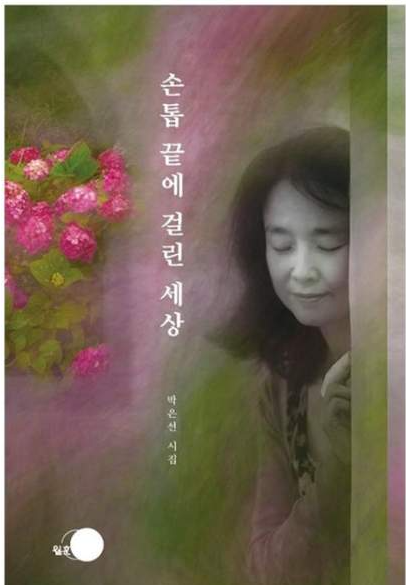 [코리안투데이] 다섯 번째 시집에 담긴 상처와 기억, 회복의 언어를 따라가다 © 김현수 기자 |
책의 마지막인 5부 피사체 앞에서에는 작가의 말과 경식의 書, 이승하 시인의 해설 시를 쓰면 아픔이 사라지더이다가 담겼다. 해설은 박은선의 시가 독자 가까이에서 이야기를 건네는 언어라는 점에 주목한다. 난해한 표현에 기대기보다 상처와 삶을 독자가 체감할 수 있는 이미지로 풀어낸다는 평가다.
손톱 끝에 걸린 세상이 보여주는 세계는 화려하거나 거대하지 않다. 눈빛과 달무리, 꽃과 바람, 손끝의 온기처럼 쉽게 지나칠 수 있는 대상들이 시의 중심에 놓인다. 작은 대상에 집중하는 시선은 평범한 하루가 수많은 기억과 관계로 이루어졌음을 환기한다.
특히 시집은 아픔을 극복했다고 선언하지 않는다. 상처가 남아 있는 상태에서 어떻게 다시 살아갈 수 있는지를 묻는다. 쉼표와 여백, 꽃과 파도 같은 이미지가 반복되는 이유도 여기에 있다. 멈춤은 끝이 아니라 호흡을 되찾는 시간이다. 기억은 과거에 갇히는 일이 아니라 현재를 이해하는 과정으로 확장된다.
박은선은 개인의 경험에서 출발하지만 자신의 고통만을 강조하지 않는다. 독자는 작품 속 상실과 기다림을 따라가며 자신의 기억을 떠올리게 된다. 시인의 구체적인 장면이 독자의 경험과 만나는 순간, 한 사람의 이야기는 여러 사람의 삶을 비추는 언어가 된다.
손톱 끝에 걸린 세상은 사소한 순간을 오래 바라보는 일이 왜 필요한지 묻는 시집이다. 빠르게 흘러가는 일상에서 놓친 감정과 관계를 다시 만져보게 한다. 손끝에 겨우 걸린 작은 기억도 한 사람의 삶을 지탱할 수 있다는 사실을 조용하게 전한다.
[ 김현수 기자: [incheoneast@thekoreantoday.com
Following the Language of Wounds, Memory, and Recovery in Her Fifth Poetry Collection
Poet Park Eun-seon’s fifth poetry collection, A World Caught on the Tip of a Fingernail, has been published by Wolhoon Publishing. Rather than focusing on grand events, the collection examines the minute traces left behind in everyday life. Through sensations felt at the fingertips and memories accumulated over time, Park contemplates the wounds of living. Restrained language that captures moments on the verge of disappearance lies at the heart of the collection.
 |
Published on February 10, 2026, the book is a 180-page hardcover edition. Its ISBN is 9791199000964. According to bibliographic information provided by online bookstores, the collection is divided into five parts. Parts 1 through 4 contain poems, while Part 5 includes the poet’s note, an essay by Bae Gyeong-sik, and literary commentary by poet Lee Seung-ha.
Part 1 opens under the title The Hour of Despair Lying on My Red Cushion. It includes poems such as Persimmon Blossom, The Sanctuary of Silence, The Prison of Longing, Moonlight Regret, The Flame of Love, and The Origin of Life. These works confront loss and loneliness without pushing emotion into excess. Rather than explaining pain directly, Park reveals it through the traces left on objects and landscapes.
Part 2, The Rose, Its Rebirth, turns its attention to life blooming again after injury. Readers encounter poems such as Flowers on a Winter Lake, Rowing a Ferryboat Along the Way, The Bond of the Wind, The Empire of Roses, and The Flight of the Messenger. Images of roses, flowers, wind, and islands function as more than simple scenery. They become poetic passages connecting memory with recovery.
The title poem, A World Caught on the Tip of a Fingernail, appears in Part 3, Quietly, Yet Forever. The title encapsulates the perspective that runs throughout the collection. A fingertip is small, yet it is also a place of heightened sensitivity. Through this tiny point of contact, the poet summons lost time, people who have passed through her life, and the pain that remains in the heart.
Part 3 also includes poems such as Declaration of Separation, The Full Moon’s Double, The Whole Story of the Incident, Comma, The Dance of Empty Space, Unpredictable, and Silver-Scaled Tears. These works emphasize the power of silence and absence. They suggest that emotions left unspoken do not simply disappear. The section title, which places stillness beside permanence, reflects this poetic attitude.
Part 4, The Month When Poetry Blooms, expands the collection’s exploration of memory, nature, and place. It includes The Month When Poetry Blooms, A Love Song for Nohwado, At Daeheungsa Temple, Reeds Embraced by the Sea, Love of Zinnias, Songho-ri Port, and Self-Portrait. Specific locations and natural objects awaken personal memories. The sea, flowers, ports, and wind take on new meaning when they meet the time through which the poet has lived.
Park Eun-seon was born in Daejeon and is a member of the Korean Writers’ Association, the Korean Contemporary Poets Association, and PEN Korea. Her previous poetry collections include Before Meeting the Moon of the Sea and A Secret Known Only to the Sea. A World Caught on the Tip of a Fingernail has been introduced as her fifth collection.
Part 5, Before the Subject, concludes the book with the poet’s note, Bae Gyeong-sik’s essay, and Lee Seung-ha’s commentary, titled When I Write Poetry, the Pain Disappears. The commentary highlights the closeness of Park’s poetic language to the reader. Rather than relying on obscure or overly complex expression, her poetry transforms wounds and lived experience into images readers can recognize and feel.
The world portrayed in A World Caught on the Tip of a Fingernail is neither dazzling nor immense. Easily overlooked things, including a gaze, a halo around the moon, flowers, wind, and the warmth of fingertips, occupy the center of the poems. By focusing on small objects and fleeting sensations, Park reminds readers that an ordinary day is formed from countless memories and relationships.
The collection does not declare that pain has been completely overcome. Instead, it asks how a person can begin living again while scars remain. This helps explain the recurring images of commas, empty spaces, flowers, and waves. A pause is not an ending, but a moment in which one can recover one’s breath. Memory is not presented as something trapped in the past. It becomes a way of understanding the present.
Park begins with personal experience, yet she does not confine the poems to her own suffering. As readers follow the losses, longings, and periods of waiting within the collection, they may find themselves recalling memories of their own. When the poet’s specific scenes meet the reader’s experience, one person’s story becomes a language capable of reflecting many lives.
A World Caught on the Tip of a Fingernail asks why seemingly insignificant moments deserve sustained attention. It invites readers to reconnect with emotions and relationships overlooked in the speed of everyday life. Quietly and without exaggeration, the collection suggests that even a small memory, barely held at the fingertips, can help sustain a human life.
THE KOREAN TODAY × WIA CODE
이 기사의 WIA Code

WIA Code 스캐너로 비추면 인터넷 없이 발행 사실과 위·변조 여부를 확인할 수 있습니다.
휴대폰 기본 카메라로 찍으면 스캐너 안내 페이지가 열립니다 — 기사 바로 열기

움직이는 코드는 스트림입니다 — WIA Code 스캐너로 약 29초 비추면 기사 전문(사진 포함)이 폰에 저장되어 인터넷 없이도 읽을 수 있습니다.
WIA Code · 코리안투데이


답글 남기기